
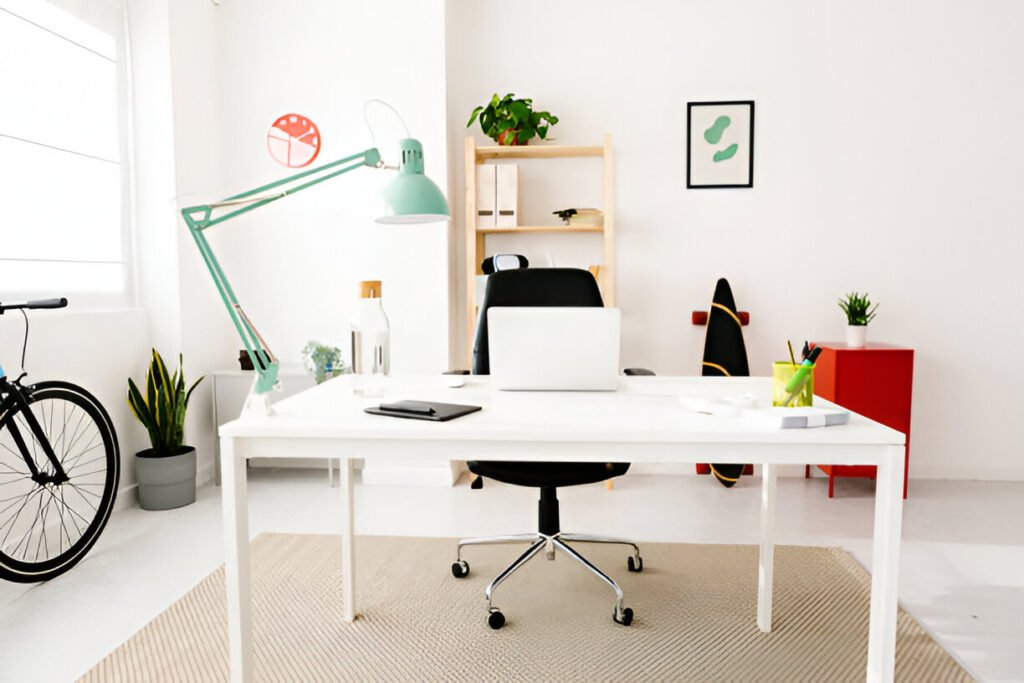
Choosing the right lighting for your workspace is the most important factor. I’ve been working from home for years now, and I’m not going to lie, I used to think overhead lighting was enough.
Just flip the switch, and you’re set, right? It turns out that the type of lighting you choose directly affects your productivity and how your eyes feel after a long day.
If you’re setting up a workspace or wondering why your eyes hurt after hours of screen time, the answer might be your home office lighting. This guide compares desk lamps vs overhead lighting and discusses which option works best for your specific needs.
Key Takeaways:
- Desk lamps provide focused, adjustable task lighting that reduces eye strain for close-up work
- Overhead lighting offers broad ambient coverage but lacks precision and can cause glare
- Energy costs differ significantly between LED desk lamps and traditional overhead fixtures
- The best workspace lighting combines both types in a layered approach
- Your choice depends on work type, room size, and how many hours you spend at your desk
Why Workspace Lighting Directly Affects Productivity and Health
Research from 2024 studies indicates that 69-74% of computer users experience digital eye strain, with home office lighting setup being a major factor.
Poor lighting creates visual fatigue as your eyes work harder to compensate for dim spots or harsh glare. This increases cognitive load due to constant adjustment.
Studies show employees exposed to poor lighting experienced a 24% drop in productivity and a 30% increase in headaches. If you feel drained after work, lighting may be the reason.
Remote workers, students, and content creators face extended desk hours without professionally lit offices.
Wrong setups force uncomfortable postures as you lean in to see better or shift away from glare, breaking down long-session comfort.
Lighting Impact Matrix:
| Factor | Poor Lighting | Proper Lighting |
| Focus | Frequent breaks, distraction | Sustained concentration |
| Comfort | Eye strain, headaches | Reduced fatigue |
| Output | 23% productivity drop | Optimized workspace for productivity |
Understanding Desk Lamps vs Overhead Lighting
What a Desk Lamp Is Designed to Do
Desk lamps light up your immediate work area with precision. Unlike overhead fixtures flooding entire rooms, desk lamps focus light exactly where you need it for specific tasks.
This is task-focused illumination for reading documents, typing, sketching, and reviewing printed materials.
Directional control sets desk lamps apart. Angle the light, adjust the height, and reposition the lamp as needed.
If you need a brighter light for reading, place your monitor on the right while your desk lamp sits on the left. A desk lamp handles that scenario without issue.
Types of Desk Lamps
| Type | Description | Best For |
| LED Desk Lamps | Energy-efficient bulbs with adjustable brightness and color temperature | Office work, reading, and lower electricity costs |
| Adjustable Arm Lamps | Flexible gooseneck or articulating arms positioning light at any angle | Drafting, detailed tasks, multi-surface areas |
| Clamp Lamps | Space-saving design clamping to the desk edge, freeing surface area | Small desks, dual monitors, minimalist spaces |
| Smart Desk Lamps | App- or voice-controlled with automated settings, timers, color modes | Tech setups, circadian rhythm optimization |
Advantages of Desk Lamps
- Precision lighting: Control exactly where light goes. Writing notes left while your monitor’s right? Angle the lamp to avoid screen glare while illuminating your notebook.
- Reduced eye strain: Proper task lighting prevents eye overwork. Correct positioning eliminates harsh shadows, forcing constant eye readjustment.
- Energy efficiency: LED desk lamps use 10 to 18 watts versus 60 to 100 watts for traditional bulbs. Massive electricity savings for long daily work hours.
- Custom brightness and color temperature: Switch between cool white for focused work and warm white for evenings, supporting circadian rhythm and daily comfort.
Limitations of Desk Lamps
- Limited ambient coverage: Desk lamps illuminate only small areas. Trying to illuminate entire rooms won’t work. You’ll get bright desks surrounded by darkness, creating contrast issues.
- Can cause contrast imbalance if misused: Super-bright desk lamps in dark rooms strain the eyes. Extreme lit-workspace-versus-dark-surroundings difference forces constant pupil adjustment.
Understanding Overhead Lighting
What Overhead Lighting Is Designed to Do
Overhead lighting provides general room illumination from ceiling-mounted fixtures.
This is your ambient light foundation, spreading brightness evenly across spaces and eliminating dark corners for baseline visibility. You’re lighting entire environments, not targeting specific work surfaces.
Consistent brightness prevents squinting in shadowy areas. In shared spaces like offices or study rooms, overhead lighting ensures adequate visibility regardless of seating position.
Common Types of Overhead Lighting
| Type | Description | Best For |
| Ceiling-Mounted LEDs | Flat panel or dome fixtures distributing light evenly across rooms | Modern home offices, energy-conscious setups |
| Fluorescent Fixtures | Tube-style lights common in commercial spaces, bright but harsh | Large rooms, workshops, basements |
| Chandeliers | Decorative fixtures with multiple bulbs, more style than function | Formal spaces, dual-purpose rooms |
| Recessed Lighting | Built-in ceiling lights sitting flush, providing downward illumination | Minimalist designs, low-ceilinged rooms |
Advantages of Overhead Lighting
- Even light distribution: Ceiling fixtures eliminate the need for multiple light sources. One overhead setup covers entire rooms and is practical for multi-person spaces or large work areas.
- Minimal desk clutter: No lamps taking valuable surface space. Desks stay clear for monitors, keyboards, and documents. This matters with limited square footage.
- Good for shared spaces: Multiple room users get equal light access without requiring individual lamps.
Limitations of Overhead Lighting
- Glare risk: Direct light reflects off glossy surfaces, such as monitors and polished desks. Reflected glare creates visual discomfort, forcing seating adjustments or awkward screen tilting.
- Poor task precision: Overhead lights can’t target specific areas. Focused light needed for detailed work leave you squinting or leaning closer.
- Higher energy usage in some setups: Older fluorescent or incandescent ceiling fixtures use more electricity than modern LED alternatives, illuminating entire rooms when small-area lighting suffices.
Desk Lamps vs Overhead Lighting: Direct Comparison
Lighting Quality and Focus
Desk lamps win for task clarity. Reading fine print, editing photos, or writing by hand gets focused beams, eliminating shadows and highlighting exactly what you’re working on. Light hits work surfaces at optimal angles, making text crisp and details visible.
Overhead lighting provides ambient coverage without precision. Great for viewing general room layouts, finding shelf items, or moving safely.
However, concentrated work doesn’t achieve the required brightness. Light spreads too thin across space.
Eye Strain and Visual Comfort
Desk lamps reduce eye strain when positioned correctly. Placing lamps 15 to 20 inches from work areas at 45-degree angles gives shadow-free illumination without glare.
Eyes don’t work as hard when focusing. This follows ergonomic workspace setup principles.
Overhead lights create two problems. First, direct glare from a light source behind you reflects off monitors. Second, contrast ratios tire eyes.
Bright ceiling lights in dim rooms force constant pupil adjustment. Flicker from older fluorescent fixtures worsens this, contributing to headaches and fatigue.
Energy Efficiency and Cost
| Lighting Type | Average Wattage | Daily Usage (8 hrs) | Annual Electricity Cost* |
| LED Desk Lamp | 10-18W | 0.08-0.14 kWh | $4.70-$8.23 |
| LED Ceiling Panel | 40-60W | 0.32-0.48 kWh | $18.82-$28.22 |
| Fluorescent Fixture | 80-100W | 0.64-0.80 kWh | $37.63-$47.04 |
*Based on average electricity rate of 16 cents per kWh
Cost differences are significant. LED desk lamps use one-fifth the energy of traditional ceiling fixtures. Lighting only desks for focused work saves money versus illuminating entire rooms.
Flexibility and Control
Adjustability is where desk lamps dominate. Modern LED desk lamps offer brightness dimming, color temperature adjustment from 3000K warm to 6500K cool white, and physical positioning through articulating arms. Customize lighting to match the time of day and work type.
Smart features add control layers. Voice-activated lamps, app-based scheduling, and automated circadian modes let you set preferences once. User-specific needs get addressed without manual adjustments.
Overhead lighting lacks flexibility. Most ceiling fixtures are either on or off, with some dimmer switches.
Can’t redirect light, change color temperature, or target specific areas without expensive multiple-zone recessed lighting installations.
Desk Lamps vs Overhead Lighting: Best Lighting Choice by Use Case
Remote Workers
Taking video calls requires more than desk visibility. You need flattering lighting to avoid harsh facial shadows or backlit silhouettes.
Desk lamps positioned slightly in front and above eye level provide even facial lighting for camera work.
Long desk hours demand eye-friendly setups. Combining desk lamps for task work with softer overhead ambient lighting reduces harsh contrast and fatigue.
Adjust screen brightness to match surrounding light levels. Having the right essential home office equipment includes layered lighting that adapts throughout days.
Students
Reading and writing tasks require focused, shadow-free light. Students working with textbooks, handwritten notes, and printed materials benefit from adjustable desk lamps positioned opposite their dominant hands. Right-handed students place lamps on the left to avoid writing shadows.
Small rooms and shared spaces make desk lamps ideal for students. Desk options for small spaces paired with clamp lamps maximize limited square footage.
Overhead lighting can disturb roommates or family members, while desk lamps keep light where needed without spilling into shared areas.
Content Creators
Visual consistency matters when editing photos, recording videos, or designing graphics. Color temperature stability from LED desk lamps ensures screen viewing matches the final output.
Fluctuating overhead lighting changes colour appearance, making accurate work difficult.
Camera-friendly lighting uses multiple sources to eliminate shadows and create depth. Dual monitor setups benefit from monitor-mounted light bars reducing screen glare while providing ambient glow.
Pairing with overhead ambient lighting creates professional video backdrops without harsh shadows or overexposed spots.
Recommended Setup by Persona
| User Type | Primary Light | Secondary Light | Special Considerations |
| Remote Workers | Adjustable desk lamp (front-facing for video) | Soft overhead ambient | Balance screen brightness with room light |
| Students | Clamp or articulating desk lamp | Minimal overhead | Position opposite dominant hand |
| Content Creators | Monitor light bar + fill lamp | Dimmable overhead | Match color temperature across sources |
Is One Better Than the Other? The Hybrid Lighting Approach
Neither desk lamps nor overhead lighting wins outright. The best workspace uses both in a layered approach. This is how professional offices handle lighting, and there’s no reason your home setup should be different.
Start with overhead lighting to establish a baseline room brightness. This ambient layer prevents the cave-like feeling of working in a dark room with just a desk lamp illuminating your immediate area.
Add task lighting with a desk lamp positioned for your specific work. This focused layer provides the precision and adjustability that overhead lights can’t offer.
The layered lighting concept creates depth, eliminates harsh shadows, and reduces the contrast ratio between your bright work surface and the surrounding environment.
Your eyes won’t strain from constant adjustment between dramatically different brightness zones.
Practical setup examples make this clearer. For a home office, install dimmable LED ceiling panels on a separate switch from your desk lamp.
During morning hours, use both for maximum brightness that energizes and supports focus.
As afternoon transitions to evening, dim the overhead lights and rely more on your desk lamp with a warmer color temperature.
This mimics natural daylight patterns and supports your circadian rhythm without disrupting evening wind-down.
For shared workspaces or study areas, use neutral overhead lighting for general visibility while each person controls their own desk lamp intensity.
This prevents one person’s lighting preference from affecting everyone else in the room. Everyone gets the flexibility they need without compromise.
How to Choose the Right Lighting for Your Workspace
Key Factors to Consider
- Room size: Larger spaces need overhead lighting to prevent dark zones. Single desk lamps in 12-by-12-foot rooms create isolated pools of light surrounded by darkness. Combine overhead ambient lighting with task lamps for balanced coverage.
- Desk position: Desks facing windows reduce daytime artificial lighting needs. Position desks perpendicular to windows, minimizing screen glare.
For workspace layout planning, consider how natural light interacts with the layout before adding electrical fixtures.
- Natural light availability: Minimal window rooms require stronger artificial lighting. South-facing windows provide consistent natural light, while north-facing rooms remain dimmer throughout the day. Supplement accordingly.
- Budget: LED desk lamps range from $30 for basic to $200 for smart models with full adjustability.
Overhead LED panels cost $50 to $150, depending on size and features. Factor in long-term energy savings when comparing upfront costs.
- Work duration: Desk time of 8+ hours daily requires quality lighting with flicker-free LEDs and adjustable color temperature. Shorter work sessions can use simpler setups.
Common Lighting Mistakes to Avoid
- Placing only light sources directly behind you creates screen glare. Position lamps to the sides or in front of monitors.
- Using maximum brightness all day strains the eyes and wastes energy. You want to dim lights as needed based on ambient conditions and time of day.
- Ignoring colour temperature means working under harsh, cool-white light in the evenings, disrupting sleep patterns. Switch to warmer tones after sunset.
Avoiding these common setup mistakes immediately improves comfort and productivity.
Quick Decision Framework
- Need focused task lighting? → Desk lamp
- Need full-room coverage? → Overhead lighting
- Working 6+ hours daily? → Both (layered approach)
- Limited desk space? → Clamp lamp + minimal overhead
- Video calls or content creation? → Adjustable desk lamp + soft overhead
Final Verdict — Desk Lamp vs Overhead Lighting
For most people, the answer is both. A hybrid setup gives you the flexibility to adapt your lighting throughout the day without compromising on visibility or comfort.
If you had to choose one, desk lamps outperform overhead lighting for focused work. The adjustability, energy efficiency, and targeted illumination make desk lamps the smarter default for individual workspaces where precision matters.
That said, overhead lighting becomes necessary in larger rooms, shared spaces, or when you need general visibility beyond your immediate desk area.
The best default recommendation is a dimmable LED ceiling fixture paired with an adjustable LED desk lamp. This combination covers all scenarios without breaking the budget and gives you control over both ambient and task lighting layers.
Prioritize desk lamps when you’re setting up a personal workspace for extended computer work, reading, or detailed tasks requiring shadow-free precision.
Prioritize overhead lighting when you’re designing a multi-purpose room, sharing the space with others, or need consistent illumination across a large area. Use your workspace setup checklist to evaluate both lighting types during planning.
Desk Lamp vs Overhead Lighting: Frequently Asked Questions
Are Lamps Better Than Overhead Lights?
Task lighting and ambient lighting serve different purposes depending on workspace needs.
Lamps outperform overhead lights for focused desk work with directional, adjustable illumination reducing eye strain and eliminating work surface shadows. Position desk lamps exactly where needed without lighting entire rooms.
Overhead lights remain necessary for general room visibility and preventing harsh contrast between bright desks and dark surroundings.
Necessary scenarios include shared workspaces, large rooms, and multi-purpose areas where frequent movement occurs.
Quick comparison verdict: Lamps for task precision, overhead for ambient coverage, both for optimal comfort.
Is a Desk Lamp Good for Eyes?
Desk lamps reduce eye strain when used correctly. Poor positioning or excessive brightness worsens visual fatigue.
Match lamp output to surrounding ambient light. Super bright lamps in dark rooms create tiring contrast.
Cool white light (5000K-6500K) works for daytime focus while warm white (3000K-4000K) suits evening work preventing sleep disruption.
Eye-safe practices:
- Position opposite dominant hand preventing writing shadows
- Use indirect lighting bouncing off desks rather than shining directly at faces
- Adjust brightness as natural light changes throughout days
- Choose flicker-free LED bulbs preventing invisible flickering causing headaches
What Is the Best Type of Lighting for an Office?
Layered lighting models combine ambient overhead fixtures with focused task lamps.
Start with overhead LED panels or recessed lighting for baseline room brightness. Add adjustable desk lamps for task-specific illumination.
Best by setup:
- Solo home office: Dimmable overhead LED + adjustable desk lamp with color tuning
- Shared home office: Neutral overhead + individual desk lamps per workspace
What Is the Difference Between a Desk Lamp and a Table Lamp?
Desk lamps engineer task lighting with adjustable arms, directional heads, and focused beams targeting work surfaces.
Table lamps prioritize ambient lighting with wider shades diffusing light in all directions rather than focusing downward.
Desk lamps include articulating joints, clamp bases, and gooseneck designs for precise positioning, while table lamps have fixed positions.