
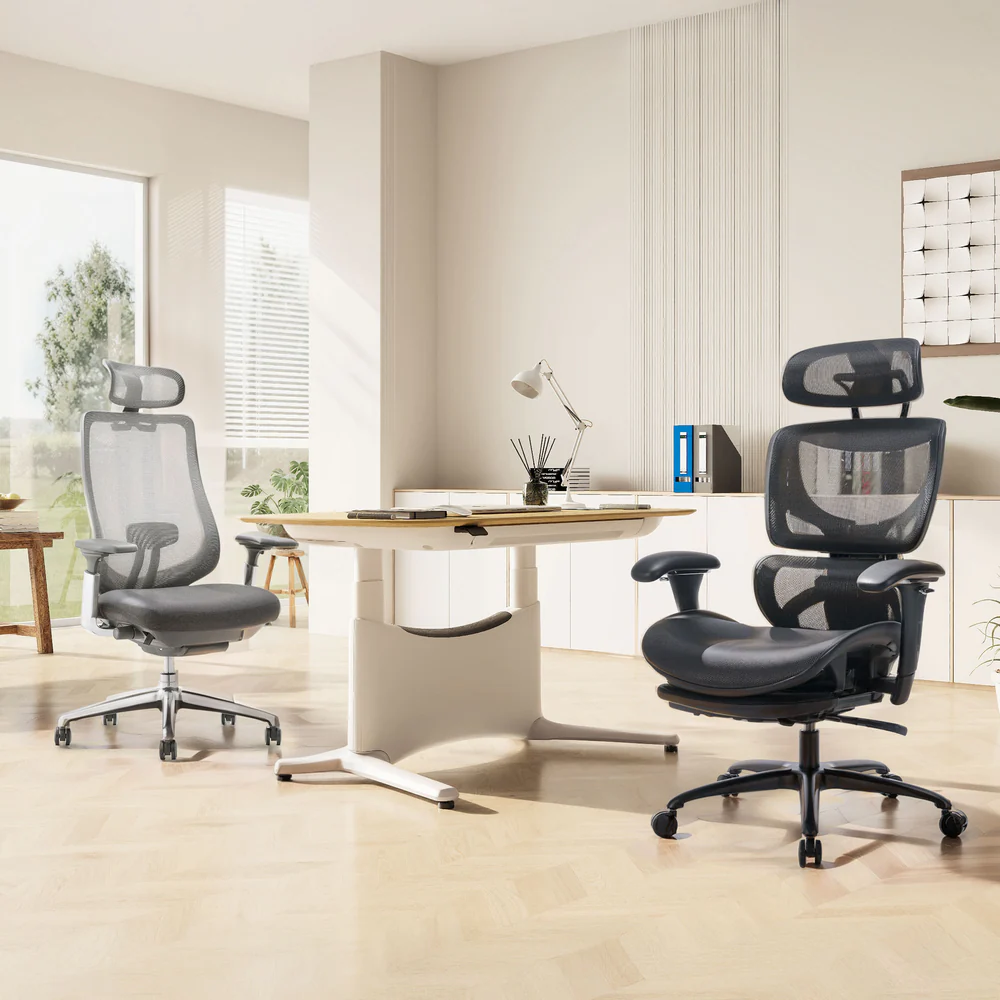
Budget ergonomic chairs usually compromise somewhere. The Colamy Kirin office chair breaks that pattern at $159, with 4D-adjustable armrests, seat-depth sliding, and build quality that surprises users.
Remote workers who need ergonomic support without premium pricing will find this chair strikes an exceptional balance, making it worth examining how it performs in real-world use, what retailers charge, and whether it truly justifies its reputation as a standout budget option.
Key Takeaways:
- The Colamy Kirin office chair Delivers 70% of premium chair features at half the cost with a rare seat slider and 4D armrests
- Best for 4-6 hour daily sitting sessions, struggles beyond that timeframe
- Fixed lumbar support and no headrest limit customisation for non-average body types
- Priced consistently at $159-189 across major retailers with a solid one-year warranty
Quick Verdict Summary of the Colamy Kirin Office Chair (Buyer Snapshot)
Ideal User Profile:
- Remote workers sitting 4-6 hours daily
- Students needing dorm-friendly seating
- First-time ergonomic buyers
- Lighter builds under 250 pounds
Poor-Fit User Profile:
- Heavy users needing 8+ hour comfort
- Tall individuals requiring full back support
- Anyone wanting premium cushioning or headrests
Primary Strengths:
- Rare seat slider at this price
- 4D armrests with functional range
- Solid construction exceeding expectations
- Breathable Korean mesh
Notable Drawbacks:
- Firm armrest pads
- Recline depth stops at 120 degrees
- No headrest included
- Fixed lumbar support
Value Assessment: Excellent. You’re capturing 70% of $300-400 chair features at half the cost.
Colamy Kirin Office Chair Overview
Brand Background and Market Positioning
Sacramento-based Colamy launched in 2019, targeting the gap between cheap task chairs and premium ergonomic investments.
The company built its presence primarily through Amazon, Walmart, and direct channels, earning credibility through consistent quality control, with reviewers comparing favourably against chairs costing 2-3 times more.
Product Line Context and Variants
The Kirin slots as Colamy’s entry model. Above sits the Ergonomic with headrest, then the Atlas with premium materials. The chair comes in three colourways with identical specs, keeping the buying decision straightforward without variant complications.
Design and Build Quality
Aesthetic Design and Workspace Compatibility
Clean lines and minimalist design define the Kirin’s appearance. The mesh back features subtle curves rather than aggressive angles, blending into modern home offices, traditional workspaces, or apartments without screaming “cheap furniture.”
When choosing between colors, grey proves most versatile for different workspace styles, while black shows dust readily and requires more frequent cleaning.
Materials, Frame, and Structural Integrity
Korean-made mesh forms the backrest, providing better breathability than standard alternatives. High-density molded foam seats resist quick collapse.
Metal components handle stress points while reinforced plastic covers non-critical areas. The SGS-certified Class 3 gas cylinder confirms tested reliability. BIFMA certification meets commercial standards.
What Are the Dimensions and Weight Capacity of the Colamy Kirin Chair?
Seat: 20″ wide, 19″ deep (adjustable), 18-22″ height. Back: 22″ high. Weight: 300 pounds capacity. Overall: 26W x 26D x 38-42H inches. Optimal for users 5’4″ to 6’0″ tall.
Comfort and Ergonomics Performance
Seat Cushion Density and Breathability
High-density foam strikes a firm-but-not-hard balance. You won’t bottom out during sits.
The foam maintains support, keeping posture aligned without the “perched on a board” feeling. Knitted fabric cover provides breathability rather than heat-trapping leather.
The cushion performs well for the first 4-6 hours, as compression sets in and remains comfortable; beyond that, limitations become noticeable.
Backrest Curve, Lumbar Zone, and Spine Support
The mesh backrest follows the natural spine curvature reasonably. Built-in lumbar support hits the L3-L5 region correctly for average builds. Mid-back height supports shoulder blades, nothing above. Mesh tension offers moderate give, conforming to your back without feeling like leaning into air, providing the spinal support needed for proper seated posture.
How Adjustable Are the Armrests on the Colamy Kirin Chair?
4D armrests at this price surprised reviewers. Height, width, depth, and angle adjustments cover most positioning needs. The range isn’t as extensive as that of $400 chairs, but it is adequate for proper 90-degree elbow support.
Does the Colamy Kirin Office Chair Have a Headrest?
There isn’t one. Mid-back design provides no head/neck support, which works well for shorter sessions but becomes a limitation for anyone who needs to lean back during breaks or requires neck support throughout the day.
Comfort Over Extended Sitting Sessions
Up to 4 hours, performance is admirable. Between 4 and 6 hours, comfort remains acceptable with position shifts. Beyond 6 hours, daily demands more substantial cushioning. The seat slider reduces leg pressure, noticeably extending comfort time.
Adjustability and Functional Controls
How Does the Height Adjustment Work on the Colamy Kirin Chair?
The standard pneumatic lever on the right controls height. Gas lift operates smoothly through the full range without sudden drops or sticking. SGS Class 3 certification rates it for regular use without premature failure.
Recline Angle, Tilt Tension, and Locking Positions
Reclines 90 to 120 degrees with tilt lock available. While that 30-degree range suffices for basic position changes, it falls short of the 130-140-degree range for deeper relaxation angles.
Tilt tension adjustment controls recline resistance. The lock mechanism engages securely at any point within the range, unlike cheaper chairs that often fail to do so.
Lumbar Support Adjustability (or Lack Thereof)
Budget constraints show clearly here. Lumbar support is fixed in position and designed for average spine curvature at average height. Outside that range, you adapt to the chair rather than the chair to you.
What Type of Casters Does the Colamy Kirin Chair Use?
Five-star nylon base provides stability without excessive weight. Casters roll smoothly on hard floors and low-pile carpet. They’re not the smoothest, but they function adequately.
Assembly and Setup Experience
Box Contents and Included Hardware
In the box:
- Seat cushion with attached mechanism
- Mesh backrest with frame
- Five-star base
- Five casters
- Gas lift cylinder
- Armrests (2)
- Hardware pack with necessary bolts and washers
- Allen wrench and multi-tool
- Assembly instructions with diagrams
The packaging quality is solid, protecting components during shipping and making unboxing straightforward.
Assembly Time, Tooling, and Difficulty Curve
Most complete assembly in 15-25 minutes, working alone with the included tools, which handle the job adequately. Instructions use clear diagrams with numbered steps. Attach the backrest to the seat, insert the gas lift into the base, press the casters in, attach the armrests, and drop the seat onto the gas lift.
Common User-Reported Assembly Friction Points
Some users report difficulty initially aligning the backrest bolt holes. The trick is to leave the bolts slightly loose until everything’s in place, then tighten them sequentially.
Caster insertion sometimes requires firm pressure. The armrest attachment is occasionally confusing because the left and right sides aren’t clearly marked.
Real-World Use Cases by Audience Type
Remote Workers and Daily Home Office Use
Remote workers who sit for 4-6 hours daily find the Kirin perfectly adequate. Video calls, document work, and spreadsheet management all work comfortably. Mesh back prevents sweaty-back syndrome that plagues faux leather in summer. The seat slider proves valuable for alternating between keyboard work and leaning back.
Students and Compact Study Spaces
Dorm rooms and small apartments benefit from a moderate footprint. It’s not a massive gaming chair that dominates a room. Students juggling classes, assignments, and video lectures appreciate the flexibility needed for varied tasks. The price point makes it accessible to student budgets without feeling cheap.
Content Creators and Long Editing Sessions
Video editors, graphic designers, and writers who spend 8+ hours seated encounter limitations. Comfort holds reasonably well for the first 6 hours; after that, you’ll want breaks.
Mid-back design means no neck support when reviewing footage, making chairs with headrests and deeper cushioning better choices for these marathon editing workflows.
Colamy Kirin Office Chair Price Guide
Typical Market Price Range
The Kirin consistently sells for $159-189 across authorized retailers. Amazon’s pricing fluctuates, with occasional $10- $20 coupons. On Colamy’s website, the price is $159; prices often drop during promotions.
Walmart typically matches Amazon. You’ll occasionally see it listed at $229-249 on secondary marketplaces; avoid these listings, as they represent significant markups.
Retailer-by-Retailer Price Comparison
| Retailer | Price Range | Warranty | Return Window |
| Amazon | $159-179 | 1 year manufacturer | 30 days |
| Colamy Direct | $159 | 1 year manufacturer | 30 days |
| Walmart | $159-169 | 1 year manufacturer | 30 days |
| Macy’s | $179-189 | 1 year manufacturer | 30 days |
Direct purchase from Colamy sometimes includes faster shipping. Amazon offers the easiest returns if needed.
Feature-to-Price Justification Analysis
At $159, you’re paying for 4D armrests, a seat slider, high-quality mesh, solid construction, and basic ergonomic design.
Chairs priced at $100-120 typically lack these features, whereas those with similar features typically start at $250.
The value gap becomes clear when you recognize you’re capturing mid-tier functionality at entry-level pricing.
Pros and Cons Breakdown
Advantages
Performance strengths:
- Seat slider functionality rare at this price bracket improves leg circulation
- 4D armrests provide enough adjustability for proper ergonomic positioning
- Build quality exceeds expectations, feels like $300 chair initially
- Korean mesh breathability prevents heat buildup during extended use
- Assembly simplicity means you’re sitting comfortably within 20 minutes
- Mid-back design works perfectly for average-height users in standard desks
Limitations
Real-world constraints:
- Armrest pads feel firm, causing pressure points during heavy forearm leaning
- Recline depth stops at 120 degrees, limiting relaxation positioning
- No headrest means zero neck support for leaning back or breaks
- Fixed lumbar support won’t accommodate all spine shapes adequately
- Comfort degradation noticeable beyond 6-hour continuous sitting sessions
- Durability questions remain due to relatively new brand presence
Comparison With Competing Office Chairs
Against Entry-Level Ergonomic Chairs
The primary competitor is Ticova Ergonomic at $179-229. Ticova offers a headrest, a deeper recline (130 degrees), and slightly softer seat padding.
Kirin counters with cleaner aesthetics and more reliable build quality, according to user reports, with both chairs using similar mesh quality that makes other feature differences more pronounced. The $20-70 price difference favors Kirin unless you specifically need that headrest.
Against Mid-to-Premium Ergonomic Chairs
| Feature | Colamy Kirin ($159) | Ticova ($199) | Branch Task ($299) | Haworth Soji ($550) |
| Adjustability | 4D arms, seat slider | 3D arms, headrest | 4D arms, lumbar | Full adjustment |
| Comfort (8hr) | Moderate | Good | Very Good | Excellent |
| Build Quality | Solid for price | Adequate | Premium | Premium |
The gap widens significantly past $300. You’re paying for refined ergonomics, proven longevity, and comprehensive adjustability that the Kirin simply can’t match. For users who sit 4-6 hours daily, the gap matters less than 50-70% cost savings.
Durability, Warranty, and Long-Term Ownership
How Long Does the Colamy Kirin Office Chair Last?
Conservative estimate: 2-3 years of daily 4-6 hour use before noticeable degradation. Optimistic scenario: 4-5 years with occasional maintenance.
Gas lift and tilt mechanisms are most likely failure points. The mesh should hold up well, but the seat foam will compress over time. Users report a solid first year, and minor creaking develops in year two.
What Warranty Does the Colamy Kirin Office Chair Come With?
Colamy provides a one-year manufacturer’s warranty covering defects in materials and workmanship. Doesn’t cover normal wear, such as upholstery degradation or cosmetic damage.
Customer service receives mixed reviews, making retailers’ 30-day return window more valuable protection than the warranty for early issues.
Keeping your receipt and testing thoroughly within the first month maximizes your options if problems emerge.
Frequently Asked Questions (FAQ)
Is the Colamy Kirin office chair suitable for long hours of sitting?
The Kirin handles 4-6 hours daily quite well. Comfort remains solid throughout this period, with no significant pressure points or fatigue. Beyond 6 hours, limitations become noticeable.
Firm seat cushioning and fixed lumbar support are starting to cause minor discomfort. For standard remote work schedules with natural breaks, it’s perfectly adequate.
What height and weight range does the Colamy Kirin chair best support?
The Kirin is optimised for users 5’4″ to 6’0″ tall and up to 250 pounds. The 300-pound capacity provides a safety margin rather than comfortable daily use at that weight.
Shorter users might find the seat depth too long, even with the slider. Taller users will miss lumbar support in the correct spots.
Does the Colamy Kirin office chair offer adjustable lumbar support?
No, lumbar support is fixed in position. The mesh backrest includes a built-in lumbar zone designed for average spine curvature at average height. It can’t be moved up or down or adjusted in depth.
For many users, this fixed position works fine naturally, though anyone outside the average body type range might benefit from adding a separate lumbar cushion for better positioning.
Does the Colamy Kirin office chair recline, and how do I use the recline/rock feature?
Yes, Kirin reclines 90 to 120 degrees. To use the recline feature:
- Pull left-side lever under seat to unlock tilt mechanism
- Lean back freely within the 90-120 degree range
- Push lever down to lock backrest at preferred angle
- Adjust tilt tension knob underneath: turn clockwise for more tension, counterclockwise for easier reclining
How adjustable is the Colamy Kirin chair (height, armrests, lumbar)?
Kirin offers moderate adjustability covering essential ergonomic needs:
- Seat height: Adjusts pneumatically through an 18-22 inch range
- Armrests: Feature 4D adjustment (height, width, depth, angle)
- Seat depth: Slides 2-3 inches
- Recline: Ranges 90-120 degrees with tilt tension control
- Lumbar support: NOT adjustable, fixed in position
What’s the maximum weight capacity, and who is this chair best suited for?
Kirin is BIFMA certified for 300 pounds maximum capacity. Comfortable daily use realistically tops out around 250 pounds.
Best suits:
- Remote workers sitting 4-6 hours daily
- Students in small spaces
- First-time ergonomic buyers
- Users 5’4″-6’0″ tall with average builds
- Anyone prioritizing value over premium features
Final Recommendation and Buyer Guidance
The Colamy Kirin delivers remarkable value at $159, offering features and build quality typically found in models priced $250-300. It’s not competing with $500+ chairs, and that honesty makes it successful.
Best-fit scenarios: Setting up the first real home office on a tight budget. Need something better than a dining chair. Sitting sessions run 4-6 hours daily.
Average-height user with a standard desk. Who benefits most: Remote workers transitioning from kitchen tables, students upgrading from dorm furniture, side hustlers building weekend offices, and anyone testing whether ergonomic chairs help before investing serious money.
Clear reasons to choose or skip: Choose if budget constraints prevent you from sacrificing basic ergonomics. Seat slider, 4D armrests, and quality mesh justify every dollar.
Skip if sitting 8+ hours daily, needing extensive adjustability, wanting a headrest, or having specific back issues.