
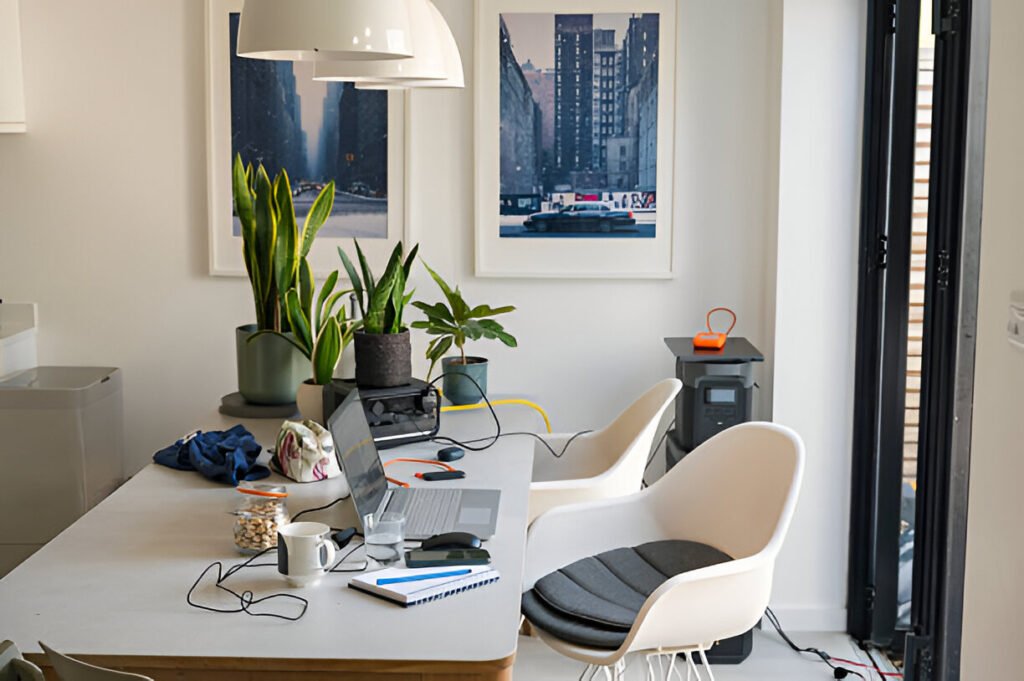
Working from home should boost your productivity, not drain your energy by 2 PM. If your space feels off despite having the right equipment, the problem might be how you’ve arranged it. A Feng Shui home office layout offers practical solutions for positioning furniture and managing energy flow to support focused work.
This ancient Chinese practice focuses on creating spaces where energy (Chi) flows naturally rather than being blocked or rushing.
For remote workers, applying these principles means arranging your desk for maximum control, choosing colors that support concentration, and fixing layout mistakes that subtly drain you throughout the day.
The changes are simpler than you’d think. Most involve rearranging what you already have rather than buying new stuff.
From this post, you’ll discover why desk placement matters more than desk quality, how natural light affects your energy levels, and which common setups sabotage your productivity without you even realizing it.
Quick Takeaways:
- Command position (desk facing door, not in line) reduces stress
- Natural light and decluttering improve energy flow significantly
- The five elements (wood, fire, earth, metal, water) need balance
- L-shaped desks require specific corner positioning
- Never place your desk facing a wall or with its back to the door
What Is Feng Shui and How Does It Apply to Home Offices?
Feng shui, which translates to “wind-water,” has existed for over 3,000 years. The concept: arrange your environment so that energy (Chi) flows smoothly rather than getting blocked. When Chi flows well, you feel alert. When blocked, you feel sluggish.
Home office feng shui prioritizes clarity and sustained energy over relaxation. While bedroom feng shui focuses on rest, office feng shui optimizes for decision-making and work performance.
What Are the Five Feng Shui Elements for Office Spaces?
Five elements form the foundation of feng shui:
Wood – Represents growth
- Expressed through furniture, plants, or green colors
- Brings energy of expansion and development
Fire – Brings passion
- Introduced via lighting, candles, or red accents
- Activates motivation and energy
Earth – Provides stability
- Present through earth tones, ceramics, or stones
- Creates grounding and centeredness
Metal – Sharpens clarity
- Embodied in metal furniture or white colors
- Enhances focus and precision
Water – Symbolizes flow
- Represented through water features or blue tones
- Supports adaptability and ease
Balance matters most. If your office has strong metal energy from white walls and metal furniture, adding wood through plants softens the space.
What Are the Most Common Feng Shui Home Office Layout Mistakes?
Positioning your desk facing a wall creates a psychological barrier that limits creativity. Energy stagnates when there is nowhere to flow, making you feel boxed in.
Sitting with your back to the door triggers low-grade fight-or-flight mode. You can’t fully relax when you can’t see who’s entering, which drains your energy throughout the day.
Clutter blocks Chi like debris blocking a river. Papers, old materials, and overcrowded surfaces create stagnant energy manifesting as procrastination and mental fog. Holding onto things “just in case” prevents fresh opportunities from entering your workspace.
Where Should You Place Your Home Office for Optimal Feng Shui?
The ideal home office is in a separate room, away from your bedroom. Mixing work and rest spaces blurs energetic boundaries, making it harder to engage fully with either. Not everyone has this option.
Work with what you have by prioritizing natural light and minimal noise. Natural light boosts alertness and regulates your body clock.
Position yourself near windows when possible, but avoid standing directly behind them—this reduces stability.
Noise affects Chi flow. Constant interruptions create chaotic energy and disrupt concentration. Control external noise when possible. Otherwise, use white noise or instrumental music to create an energetic buffer.
How Should You Position Your Desk Near a Window?
Windows provide natural light and outdoor connection, but positioning determines whether they help or hinder. The best setup places your desk beside a window rather than facing it. This grants light access without constant distraction or screen glare.
Facing a window seems inspiring, but feng shui considers it an energy drain. Your focus shifts outward toward outdoor activities rather than staying on task at work. You’ll feel exhausted despite accomplishing little.
If desk placement near a window is your only option, use sheer curtains to diffuse sunlight and create a subtle barrier. Keep windowsills clear so energy circulates freely.
Where Should You Place Your Desk for Optimal Feng Shui Home Office Layout?
Command position is feng shui’s most important office concept. Place your desk diagonally across from the door—you can see anyone entering without being directly in the doorway’s path. This creates control and security, enabling confident work.
Diagonal positioning works because it provides awareness without exposing the target. You’re not hiding (back to the door), but also not in the path of energy rushing through the doorway, which feels aggressive.
Do’s:
- Position the desk with a solid wall behind for support
- Ensure clear door visibility from your seat
- Leave open space in front of the desk
- Use a supportive high-back chair if wall placement isn’t possible
Don’ts:
- Never sit with your back to the door or the window
- Avoid direct alignment with the door
- Don’t face blank walls when alternatives exist
- Skip desk placement under ceiling beams
How Do You Design a Feng Shui Office Layout?
Creating zones in your office helps direct energy flow. Divide space into three areas: active work, inspiration, and storage. Your main desk occupies the work zone.
An inspiration area may include a reading chair, a vision board, or a reference bookshelf. Storage should be accessible yet tucked away to avoid visual clutter.
Color psychology drives feng shui energy. Blues promote calmness and deep concentration. Greens encourage creativity and growth.
Earthy tones like beige and brown provide grounding. Avoid excessive red—while energizing, it creates aggression or pressure leading to burnout.
Furniture arrangement should facilitate smooth movement. Energy flows like water, so create clear pathways without forcing yourself to squeeze between obstacles.
Every item needs a specific purpose and location. If unused for six months, it’s blocking energy rather than supporting work.
How Should You Position an L-Shaped Desk?
L-shaped desks offer excellent workspace but require thoughtful positioning. Place the main section in the command position, with a solid wall behind and a clear line of sight through the door. The extended arm can angle into the room or along an adjacent wall.
The critical mistake is positioning L-shaped desks facing directly into corners. This creates energy dead ends, making you feel trapped. Instead, arrange it so one arm extends outward into the room, allowing Chi to circulate around your workspace.
| Scenario | Positioning | Energy Result |
| Corner with a window | Main against the wall, extension toward the window | Natural light, good flow |
| Open room | Diagonal placement, both arms visible | Maximum command position |
| Small space | One arm against the wall, one extending | Prevents trapped feeling |
How Do You Apply Feng Shui in Small Office Spaces?
Small offices demand extra attention to clutter and furniture scale. Choose minimalist multipurpose furniture.
Desks with built-in drawers eliminate the need for separate filing cabinets. Wall-mounted shelves maximize vertical space while keeping floors clear for better circulation.
In bedroom offices, less is more. Keep only essential work items visible and store everything else in closed cabinets. This allows mental “closure” at the end of work hours. A desk lamp on a timer signals transitions between work and rest modes.
Mirrors expand small spaces visually, but use them carefully. Never position mirrors reflecting your desk or work—this doubles your workload energetically. Instead, place mirrors to reflect natural light or pleasant views, amplifying positive energy without overwhelming the space.
What Accessories and Decor Support Feng Shui in Offices?
Plants purify air and represent the wood element. Snake plants, pothos, and peace lilies work well in low light. Place a plant in the far-left corner of your desk (the wealth corner) to attract abundance.
Crystals serve specific purposes: amethyst promotes calm, citrine attracts prosperity, clear quartz amplifies energy, and black tourmaline absorbs electronic negativity.
Water features introduce the water element with soothing sound. Position them in the north (career) or southeast (wealth) areas, but avoid placement directly behind you.
Avoid broken objects, sharp pointed edges, mirrors reflecting doors, dead plants, and excessive personal photos.
How Can You Use Feng Shui to Boost Productivity?
Energy-boosting layouts start with lighting. Layer your sources: natural light, ambient overhead lighting, and focused task lighting. Warm-toned bulbs create a welcoming atmosphere, unlike harsh fluorescents, which cause eye strain.
Airflow matters. Stale air creates stagnant Chi, while fresh air circulates positive energy. Open windows when the weather permits. Otherwise, use plants or small fans to circulate air.
Morning energy setup:
- Open curtains, welcoming daylight
- Light candles or lamps, activating the fire element
- Clear yesterday’s clutter before starting new work
- Set a daily intention while sitting in a command position
Afternoon energy refresh:
- Take five-minute breaks away from the desk
- Water or adjust plant positions
- Open windows or turn on fans refreshing air
- Tidy any accumulated morning clutter
Evening wrap-up:
- Clear the desk completely before ending work
- Turn off electronics, reducing overnight electromagnetic energy
- Close curtains containing day’s energy
- Spend one minute in gratitude for accomplishments
Aromatherapy boosts workspace energy. Rosemary and lemon oils increase productivity. Lavender and chamomile promote calmness. Use diffusers or scented candles to introduce pleasant scents.
Regularly rotate decor to prevent energy stagnation. Move desk plants monthly. Change inspirational artwork quarterly. Refresh small items seasonally. These micro-adjustments keep energy dynamic, preventing the workspace from feeling static.
What Are Common Feng Shui Office Problems and Their Solutions?
Problem: Desk faces the wall
- Solution: Reposition the desk facing into the room. If impossible, hang inspiring artwork or a mirror on the wall to create visual depth.
- Prevention: Always prioritize the command position when setting up a new workspace.
Problem: Back to the door
- Solution: Rearrange immediately—this is the worst feng shui position. If you absolutely can’t change it, place a small mirror on the desk angled to reflect the doorway.
- Prevention: Map the room layout, prioritising the command position, before moving furniture.
Problem: Cluttered corners
- Solution: Clear the corners completely, then add one meaningful item (plant, lamp, or artwork) to activate the space. Empty corners trap stagnant energy.
- Prevention: Weekly corner checks prevent accumulation.
Problem: Poor lighting
- Solution: Add layered lighting with warm-toned bulbs. Position task lighting to eliminate shadows on the work surface.
- Prevention: Evaluate lighting at different times of day when first setting up the office.
Problem: Blocked windows
- Solution: Clear windowsills and surrounding areas. Use minimal window treatments to allow light in while maintaining privacy.
- Prevention: Keep windows part of the weekly cleaning routine to maintain unobstructed light flow.
Problem: Sharp edges pointing at the desk
- Solution: Rotate furniture so the corners point away from the seating area. Soften unavoidable sharp edges with plants or fabric.
- Prevention: Choose rounded-edge furniture when purchasing new pieces.
Case Studies & Examples
Bedroom Office Transformation: Sarah worked from a cramped bedroom corner with her desk pushed against the wall, facing directly into the corner, back to the door.
Papers piled on the floor created constant visual chaos. She felt exhausted by mid-afternoon daily and struggled to separate work from personal time.
After repositioning her desk diagonally to achieve a command position, installing wall-mounted shelves for storage, and adding a bamboo room divider to separate the desk from the bed, Sarah reported a 40% reduction in afternoon fatigue.
The physical boundary helped her mentally “leave work” at day’s end. Adding a snake plant in the wealth corner completed the transformation.
Living Room Corner Setup: Michael’s L-shaped desk crammed into his living room corner faced two walls and had no natural light.
Non-work items cluttered the surface constantly. He felt trapped during work hours and noticed family members avoiding the living room entirely.
Rotating his desk so one arm extended into the room while the other remained against the wall immediately improved his posture. Installing a sheer curtain on the nearby window brought in natural light without glare.
Dedicated storage boxes for non-work items cleared visual clutter. Adding a small water fountain in the north position enhanced career energy.
Michael’s focus during work hours improved dramatically, and family members began using the living room again, respecting the defined workspace.
Spare Room Office: Jennifer’s desk sat directly under a ceiling beam facing a window overlooking busy street activity.
Harsh overhead lighting was her only light source. She experienced frequent headaches and elevated stress levels throughout workdays.
Moving the desk from under the beam to a wall with a door view, angling it beside rather than facing the window, and adding layered lighting with a desk and floor lamps transformed her experience. Headaches decreased significantly, and productivity metrics improved noticeably over thirty days.
What’s the Quick Feng Shui Checklist for Home Offices?
Implementing feng shui in your home office doesn’t require a complete overhaul. Start with a command position for your desk, clear clutter, and add natural elements. These three changes alone shift workspace energy noticeably within days.
| Element | Action | Why It Matters |
| Desk Placement | Position in the command position facing the door | Creates control, reduces subconscious stress |
| Lighting | Layer natural, ambient, and task lighting sources | Supports energy levels, reduces strain |
| Clutter | Keep only current materials visible on surfaces | Improves mental clarity significantly |
| Elements | Balance wood, fire, earth, metal, water throughout space | Creates harmonious, supportive energy |
| Decor | Add plants strategically, avoid broken items completely | Activates positive energy flow |
The goal is to create a workspace that actively supports your productivity rather than works against it.
Small adjustments compound over time—users implementing feng shui principles report 17-23% productivity gains within two months.
Your office should feel energizing in the mornings and peaceful in the evenings, supporting both focus and rest.
Frequently Asked Questions
How to Arrange Office Furniture
Start by identifying the command position—where you can see the door without being directly aligned with it. Place your desk there with a solid wall behind for support.
Arrange storage furniture along walls, maintaining open floor space for energy circulation. Use rounded-edge furniture when possible or position sharp corners away from the seating area.
How to Feng Shui Your Office
Assess which elements you already have through existing furniture, colors, and materials. Add missing elements strategically: wood through plants, fire through lighting, earth through stones, metal through organizers, water through fountains.
Position furniture, creating smooth pathways. Declutter ruthlessly, keeping only items you use regularly or that genuinely inspire you.
Where to Put a Desk in a Bedroom Feng Shui
Never position the desk directly facing the bed—this creates energy conflict between work and sleep. Command position still applies: place the desk diagonally from the door with the entrance view.
Use room dividers to create visual separation between sleep and work areas. Position the desk as far from the bed as space constraints allow. Cover the desk or close the laptop when finishing work, signaling an energetic shift.
Which Direction Should I Face While Working From Home
North supports career focus. East encourages growth and new beginnings. South brings recognition. West promotes creativity. Command position overrides directional considerations—it’s better to face a “less ideal” direction while maintaining a command position than to face a “perfect” direction with the back to the door.
Where to Put a Desk in a Room with a Window
Position the desk beside the window rather than facing it directly. This provides natural light without constant distraction or screen glare. If facing a window is unavoidable, use sheer curtains to diffuse direct light and create a subtle barrier.