
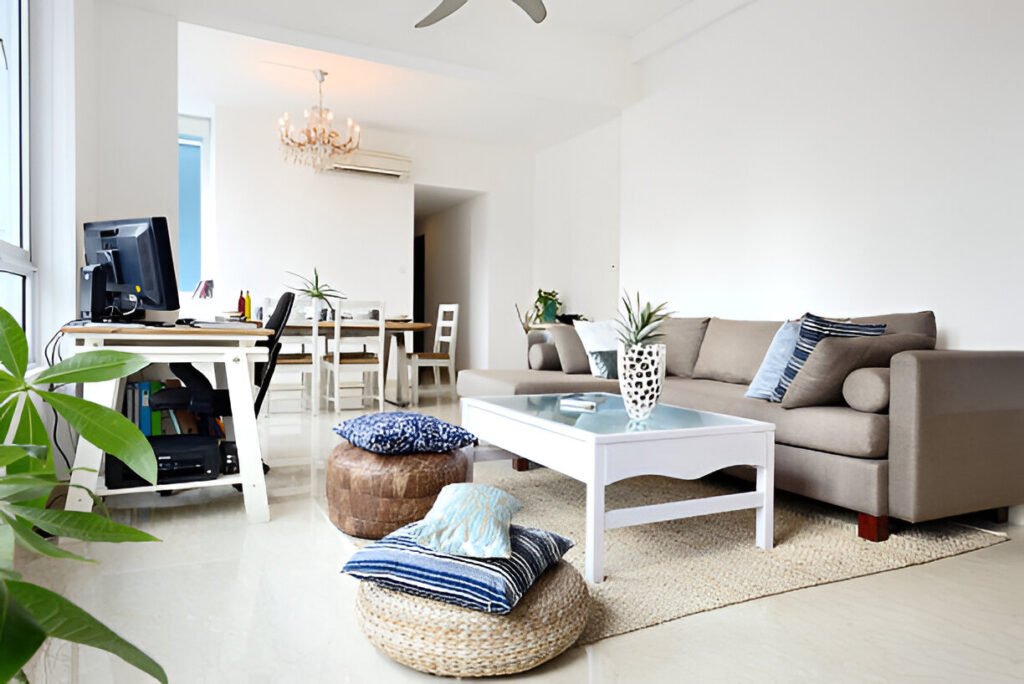
Remote work has become a permanent fixture of professional life. If you don’t have a spare bedroom, your living room is your best option.
Figuring out how to fit a workspace into the room where you relax can feel impossible, but with strategic planning and the right furniture choices, you can create a functional office.
This guide explores practical strategies for designing a home office in living room layout, including zoning your space, selecting furniture that fits, and keeping your workspace from feeling too corporate.
Quick Takeaways:
- Strategic furniture placement creates natural work-rest boundaries without physical walls
- Corner desks and behind-sofa layouts maximize unused living room space
- Proper lighting and ergonomics prevent strain during long work sessions
- Multi-use furniture keeps small spaces functional without visual clutter
- Matching office furniture to existing decor maintains aesthetic continuity
Why a Living Room Office Combo Makes Sense Today
The shift to hybrid work has proven sustainable, which means millions need home workspaces. Without a spare room, the living room combo is your most practical solution.
You get natural light, more square footage than a bedroom, and stay connected to your home. Space efficiency is the biggest benefit. You’re making a room serve double duty, leaving it empty during work hours.
Natural light reduces eye strain and maintains energy throughout the day, while accessibility keeps you connected rather than isolated in a back bedroom.
Despite these advantages, the setup comes with real challenges. Clutter becomes visible, distractions from TV or family can wreck focus, and without zoning, your brain can’t separate work from relaxation.
Clear spatial boundaries improve work-life balance even in shared spaces, which is why addressing these upfront through planning makes the difference.
Key Planning Principles Before Adding an Office to Your Living Room
Assessing Space, Light, and Traffic Flow
Before choosing furniture or finalizing your layout, measure every wall and corner. You need exact dimensions to determine what fits.
Review your traffic patterns and note where you move to reach the kitchen. Your desk can’t block pathways, or you’ll create daily frustration.
Once you’ve mapped traffic patterns, turn your attention to natural light, which boosts productivity. Windows reduce eye strain and improve mood, but direct sunlight creates glare.
Check window placement at different times. East-facing windows flood spaces early, while west-facing windows get harsh by 3 PM. Position your desk to capture light without facing it directly.
Defining Work Zones Without Walls
Since physical walls aren’t an option, use visual zoning instead. Furniture placement creates boundaries your brain recognizes.
A desk behind your sofa automatically signals a different zone. Rugs work well when placed under your desk to visually separate the space.
Beyond rugs, lighting also creates zones. A desk lamp or overhead pendant reinforces that the area serves a different function.
Furniture alignment matters too. When your desk faces a different direction from your seating, it psychologically separates functions. Don’t position your desk in line with your TV.
Best Home Office Layout Ideas for Living Rooms
Desk-by-the-Wall Layout
Among the most versatile options, this layout works in almost any living room. Place a slim desk flush against an empty wall, typically opposite or perpendicular to your sofa.
This arrangement is ideal for narrow or long rooms with limited floor space, as the desk doesn’t intrude on the seating area.
This layout requires one wall without windows or built-ins. Measure your wall and aim for a 48-60-inch desk, as anything larger will dominate the room. This setup works well for laptop users who don’t need a massive surface area.
Corner Office Setup
While wall-mounted desks maximize linear space, dead corners are wasted space. An L-shaped or triangular desk makes effective use of otherwise empty real estate.
Corner setups work well for compact desks and laptop users because they provide a work surface without encroaching on the main living area.
Position your chair facing the room rather than a wall to avoid a closed-off cubicle feel. Corner desks often include built-in storage to keep clutter off surfaces. Look for pieces with cable management cutouts.
Sofa-Back Office Layout
The sofa-back layout has become popular for good reason. Position a console-style desk behind your sofa to create a divider between the seating and work zones. Your sofa back provides visual separation without requiring screens.
Measure sofa height before buying a desk. Your desk should sit at roughly the same height as the surrounding surfaces, or slightly above, to create visual continuity.
Console desks typically measure 30-36 inches tall, matching standard sofa heights. You get a dedicated workspace that doesn’t feel like an office.
Window-Facing Living Room Desk
If your living room has windows, natural light is your best productivity tool. Positioning your desk in front of a window maximizes daylight, reducing eye strain and maintaining circadian rhythm. The view gives your eyes a screen break during eight-hour days.
The primary challenge is managing glare. Direct sunlight hitting your monitor makes work impossible.
If your window faces south or west, use sheer curtains or blinds. Perpendicular positioning works well when placing the desk to the side of a window to avoid glare.
Multi-Use Furniture Layout
Fold-down desks are game-changers for small rooms. These mount to walls and fold flat when not used, disappearing after work hours.
Options include built-in storage that holds supplies out of sight. Storage-integrated workstations combine desk surface with shelving, keeping everything within reach without separate pieces.
Drop-leaf tables work similarly. During the day, they function as your desk. In the evening, folding down one side creates a slim console. Look for pieces that match your living room aesthetic rather than standard office furniture.
Small Living Room Office Combo Ideas That Actually Work
Vertical Space Optimization
When floor space is limited, small rooms require vertical thinking. Floating shelves above your desk provide storage without consuming floor space.
Install them 12-18 inches above the desk surface for easy reach. Use shelves for books, supplies, and decorative items.
Wall-mounted desks are the ultimate space-savers. They attach to wall studs and float off the ground, keeping the floor clear. You can find fold-down versions or fixed versions. Pair with a pegboard or magnetic board above for additional vertical storage.
Minimalist Desk Solutions
Beyond vertical optimization, slim desks measuring 20-24 inches deep work in tight spaces. You don’t need a massive surface for laptop work.
Narrow desks fit where standard 30-inch options won’t, such as between windows, in alcoves, or beside bookcases.
Chair alternatives, such as stools, reduce visual bulk. Stools tuck under the desk completely when not used.
Storage Without Visual Clutter
For maintaining a minimalist aesthetic, closed cabinets beat open shelving for minimizing chaos.
A desk with cabinet doors instantly hides paperwork, chargers, and supplies while keeping everything accessible yet out of sight. Hidden cable management is crucial. Use cable clips, under-desk trays, or sleeves to route wires along furniture legs.
Furniture Placement and Layout Strategies
Balancing Office Furniture With Living Room Seating
Your desk and sofa should be spaced appropriately for comfortable movement. Aim for 36 inches of clearance between the desk and the nearest seating.
This allows the chair to be pushed back without hitting furniture. If space is tight, 30 inches works, but it feels cramped.
Beyond physical clearance, psychological comfort zones matter. When workspace sits too close to lounging furniture, your brain struggles to differentiate work from relaxation.
Physical distance reinforces mental separation. Angle your desk away from the TV if possible, as even subtle changes in orientation reduce screen temptation during work.
Long Living Room Layout Considerations
Long, narrow rooms benefit from zoning along their length. Place the desk at one end and seating at the other, creating distinct areas.
Avoid pushing everything against the walls, as this creates a tunnel effect. Instead, float the sofa partway into the room and position the desk behind or at the far end.
Breaking the length visually helps the room feel more balanced. Area rugs under zones define spaces.
Use lighting to reinforce zones with a floor lamp near the sofa and a desk lamp in the work area. This prevents the entire room from feeling like a single hallway.
Common Furniture Layout Mistakes to Avoid
Blocking light sources is the biggest error in small spaces. Placing tall furniture in front of windows cuts natural light, benefiting your entire room.
Keep window areas clear or use low-profile pieces. Overloading one side creates a visual imbalance. If the desk and storage cluster are on the same wall, the room feels lopsided.
Do’s and Don’ts:
| Do This | Avoid This |
| Position the desk perpendicular to the windows | Desk facing bright windows directly |
| Maintain 36″ traffic clearances | Blocking main walkways |
| Match furniture heights and styles | Mismatched office furniture |
| Use rugs to define separate zones | One giant rug covering everything |
| Keep cables organized and hidden | Visible cable clutter |
Style and Decor Tips for a Decorative Home Office in Living Room Layout Look
Matching Office Furniture to Living Room Aesthetic
Color continuity prevents your workspace from looking like an afterthought dropped into the room. If your living room features warm wood tones, choose a desk with similar finishes.
Cool grey furniture pairs with contemporary spaces. The goal isn’t perfect matching but rather visual harmony that makes your office furniture feel intentional rather than random.
Material consistency works the same way. Metal legs on your desk should echo metal accents elsewhere in the room. If your living room has natural textures such as wood, rattan, or linen, choose office furniture with similar organic materials.
Glass or acrylic desks work beautifully in modern spaces because they’re visually lightweight and don’t compete with existing furniture.
Making the Office Area Look Intentional
Art placement transforms a desk from a workspace to a designed element. Hang a piece directly above your desk at eye level when seated to create a focal point and make the area feel curated.
Lighting layers add depth and dimension. You can combine ambient overhead lighting with task lighting at your desk and accent lighting on shelves or walls.
Decorative objects personalize the space without making it look cluttered. A single plant, a favorite photo, or a sculptural object signals that this desk belongs here.
Avoid covering your desk with knick-knacks. Two or three carefully chosen items look intentional, while ten items look messy.
Tech, Ergonomics, and Productivity in a Shared Space
Your monitor should sit at arm’s length away, with the top of the screen at or slightly below eye level.
This prevents neck strain during long work sessions. If you’re using a laptop, get a laptop stand and an external keyboard so you’re not hunched over all day.
Your keyboard and mouse should position your elbows at 90 degrees with your wrists straight. Adjust your chair height to achieve this, or use a footrest if your feet don’t reach the floor comfortably.
Noise control strategies are important in shared living spaces where family members or roommates move around. Noise-cancelling headphones block distractions during focus work sessions.
If you take video calls, consider using a white noise machine or fan positioned away from your microphone to mask background household sounds.
Cable and device organization isn’t just aesthetic but also functional, preventing tripping hazards. Use a surge protector with USB ports to charge devices without cluttering the workspace with individual adapters.
Velcro cable ties group wires together neatly under your desk, keeping them out of sight.
Productivity Upgrades for Living Room Offices:
- Monitor riser brings the screen to the proper height without expensive arms
- Wireless charging pad eliminates phone cables on the desk surface
- Desk organizer corrals pens, clips, and small supplies in one spot
- Blue light filtering software reduces eye strain from screens
- The timer app enforces breaks away from the desk every hour
Sample Living Room + Office Layout Scenarios
Remote Worker Setup
Professionals working 40-hour workweeks need proper desk depth for dual monitors or a laptop plus writing space. A 60-inch desk positioned behind the sofa provides ample surface area.
Add a mid-back office chair for lumbar support and a desk lamp for task lighting. Storage drawers keep files accessible but hidden.
Student Study + Lounge Combo
Students juggle coursework with relaxation in the same space. A corner desk with floating shelves above stores textbooks and supplies without requiring floor cabinets.
Keep the desk to a maximum of 48 inches so the living room doesn’t feel overwhelmed by study materials. A comfortable task chair that looks residential rather than corporate maintains the room’s casual vibe.
Content Creator Workspace
Creators need camera-friendly backgrounds and storage for equipment. Position your desk facing the room, with a clean wall or a bookshelf behind you, for video calls and content recording.
Use closed cabinets or ottomans with storage for camera gear, microphones, and lighting equipment. Keep cords organized since they’ll appear in shots if visible.
Space Priorities by User Type:
- Corporate remote worker: Ergonomic seating, dual monitor space, filing storage, professional video background
- Student: Compact footprint, shelf storage for books, good lighting, minimal desk supplies
- Creative professional: Equipment storage, attractive background, flexible surface for projects
- Hybrid worker: Quick setup and takedown capability, laptop-focused, minimal permanent furniture
Final Layout Checklist for a Home Office in the Living Room
Walk through your planned layout before buying any furniture. Can you move freely between your desk and sofa? Does your chair have clearance to push back without obstruction?
Taking careful measurements before purchasing saves money and frustration later. Check that your desk doesn’t block any outlets you’ll need for lamps or phone chargers elsewhere in the room during daily use.
Visual balance means no single area dominates the entire space. Step back and assess whether your desk setup is proportionate to your seating area. If the desk looks massive compared to your sofa, it’s probably too big.
A functionality review involves sitting at your planned desk location. Can you see the door when someone enters, or are you facing a wall with your back exposed?
Are you facing a boring wall or an inspiring view? Does this spot get good natural light during your typical work hours?
Set up Validation:
- Traffic flow remains clear with 36″ walkways
- Desk height suits your chair and body proportions
- Power outlets within easy reach without extension cords
- Natural light hits the workspace without screen glare
- Storage keeps work materials organized and hidden
- Office furniture matches the living room aesthetic
- Workspace feels separate from the relaxation zone
Frequently Asked Questions
Can a home office really work in a living room?
Absolutely, and millions of remote workers use living-room offices every day. The key is proper zoning and furniture selection.
When you create visual boundaries through rugs, lighting, and strategic furniture placement, your brain separates work from relaxation even in the same physical room.
Choose furniture that matches your living room aesthetic so the office feels integrated rather than intrusive. Small desks, behind-sofa setups, and corner configurations prove you don’t need a separate room to work productively.
Where should a desk be placed in a living room?
The best desk placement depends on your living room layout and natural light sources. Corner positions maximize unused space without blocking main areas.
Behind-sofa placement creates natural zoning and uses empty floor space effectively. Window-adjacent positioning provides natural light without direct glare when the desk is angled perpendicular to the window.
Avoid blocking traffic paths, facing your desk toward the TV, or positioning yourself with your back to the door, as these can create discomfort during work.
What is the best desk size for a living room office?
For most living rooms, desks measuring 48-60 inches wide and 24-30 inches deep provide sufficient workspace without overwhelming the space.
Laptop users can go smaller; 36-48 inches works well if you don’t need room for paperwork or multiple monitors. Consider your living room’s scale. In rooms under 200 square feet, stick with compact 48-inch desks.
Larger living rooms can accommodate 60-inch desks without feeling cramped. Measure your available wall or corner space first, then shop for desks that fit those dimensions.