
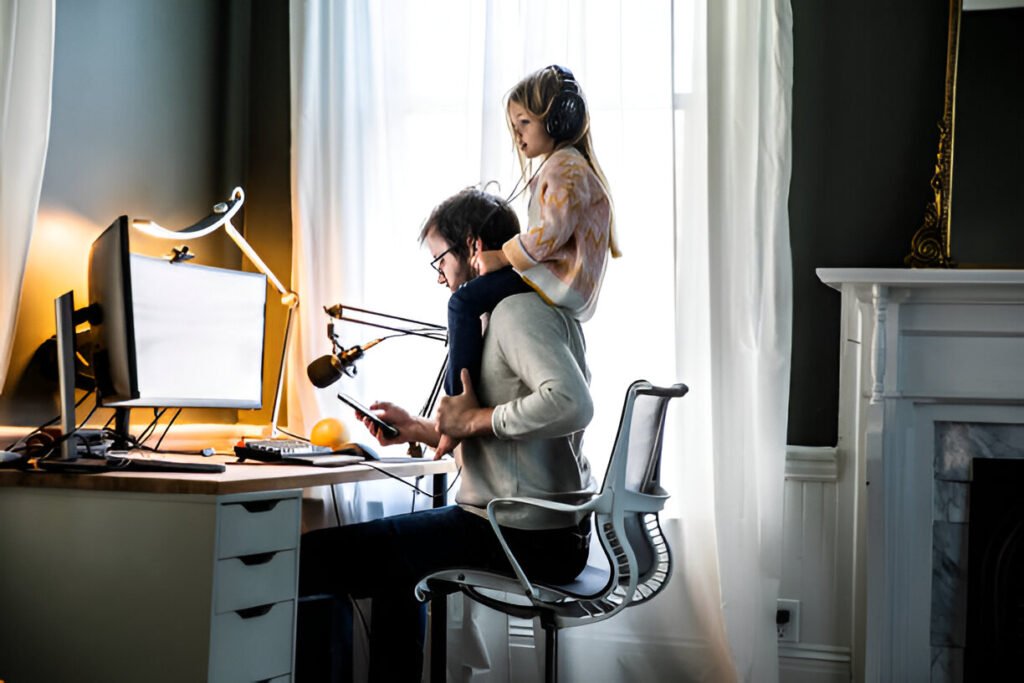
Getting the lighting right in your home office goes beyond picking a random bulb and moving on. I used to do that too—choose whatever looked fine and hope it worked out. It usually didn’t.
The real issue comes down to how many lumens you need for home office lighting, because that single detail decides whether your space feels supportive or frustrating.
Poor lighting chips away at productivity and forces your eyes to work harder than they should.
Lumens tell you how bright a light actually is, which matters far more than wattage or bulb shape when you spend hours staring at a screen.
Remote workers, students, and content creators all face the same problem: long work sessions in limited space. Without the right brightness, eye strain shows up fast and lingers.
Once you understand lumens, you stop guessing and start setting up your home office lighting with intention.
The right amount of light reduces eye fatigue, cuts down headaches, and helps you stay focused during long stretches of work, especially when deadlines stack up.
Key Takeaways
- Home offices need 50-60 lumens per square foot
- A 120 square foot office requires 6000-7200 total lumens
- Layer ambient overhead and task lighting
- Natural light reduces artificial needs by 10-20%
- Use 4000-5000K color temperature for alertness
What Are Lumens and Why They Matter
Lumens vs Watts vs Lux
- Lumens measure the total amount of visible light a bulb or fixture emits.
- Watts measure energy consumption, not brightness. An LED might use 10 watts and produce 800 lumens, the same as an old 60-watt incandescent, which is exactly why watts no longer tell you anything useful about brightness.
- Lux measures the amount of light landing on a surface. One lux equals one lumen spread over a square meter. If you know your fixture’s lumens and its distance from your desk, you can calculate the lux hitting your workspace.
The Role of Lighting in Productivity and Comfort
Your brain needs adequate light to stay alert and process information efficiently. Studies show that proper office lighting, leveraging biological factors like circadian rhythms, boosts productivity—up to 20% in some cases—over poor setups. When you strain to see your work, you experience:
- Eyes get tired faster, and focus drops
- Irritation builds throughout the day
- Headaches become more common
- Exhaustion by evening even though you were just sitting at a desk
Having the right lumen levels prevents all of that nonsense. It keeps you energized and focused for those long work sessions where you need to stay sharp and productive without fighting against inadequate lighting conditions.
How Many Lumens Does Your Home Office Actually Need?
General Room Brightness Targets
The baseline guideline for home offices sits at 50-60 lumens per square foot. This provides enough light for task-oriented work without causing glare or excessive brightness. To calculate what you need, multiply your room’s square footage by this range.
Lumen Requirements by Office Size:
- 50 sq ft office: 2,500-3,000 lumens total
- 120 sq ft office (10 ft × 12 ft): 6,000-7,200 lumens total from all lighting sources combined
- 200 sq ft workspace: 10,000-12,000 lumens total
Beyond room size, the presence of natural light also dramatically affects your requirements.
If you’ve got large windows flooding your space with daylight, you can reduce your artificial lumen targets by 10-20% during daytime hours when that sunlight is actually available.
For darker environments or basement offices without any window access, stick to the higher end of the range.
Consider your specific room dimensions, window placement, and whether you’re working primarily during daylight hours or extending into the evening when natural light disappears.
Most remote workers need full artificial lighting by late afternoon anyway, so planning for the upper end ensures you’re covered regardless of the time of day or weather conditions.
Recommended Lumen Ranges by Task and Zone
Different areas in your office serve different purposes and need different brightness levels.
- Ambient lighting (general overhead illumination): 30-50 lumens per square foot, creating baseline brightness that fills the room without focusing on any specific area, which is why task lighting becomes necessary.
- Task lighting: Concentrates on your immediate work surface where you’re reading, writing, or staring at documents all day.
Desk lamps for task work should deliver 50-100 lumens per square foot directly onto your workspace, which usually translates to a 500-1,000 lumen desk lamp depending on how focused the beam is and how it’s positioned.
- Accent or supplementary lighting: Adds visual interest and fills in shadows without contributing much to your functional lumen count.
Track lights highlighting bookshelves or LED strips behind monitors create ambience without significantly increasing the brightness of your work surface.
How Many Lumens for Different Office Sizes?
Small Home Office (up to 100 sq. ft.)
Small spaces need roughly 2500-6000 total lumens, depending on your exact square footage.
For a 50-square-foot office, aim for the lower end, around 2500-3000 lumens, using one overhead fixture providing 3000-4000 lumens for ambient light, plus a desk lamp delivering 800-1200 lumens for focused task work.
A 100 square foot space pushes toward 5000-6000 lumens total. This combination covers your bases without overloading a compact room with excessive brightness.
Ceiling-mounted LED panels work great as your main source because they distribute light evenly without taking up any desks designed for small spaces real estate.
Medium Home Office (100-200 sq. ft.)
Medium offices fall into that sweet spot where you’ve got room to breathe and still need to plan your lighting carefully.
A 120 square foot office needs 6000-7200 lumens total. A 180 square foot workspace pushes that to 9000-10,800 lumens.
Central ceiling fixtures should provide your ambient base, maybe 4000-6000 lumens from recessed lights or flush-mount LED fixtures. Then layer in task lighting at your desk with a 1000-1200 lumen lamp.
If you’ve got a reading nook or a secondary work area, add another 500-800 lumens of light there.
Distribution matters more than exact totals, so you want even coverage without dark corners or harsh shadows that strain your eyes.
Large Home Office/Shared Workspace (200+ sq. ft.)
Large spaces scale up proportionally, and the strategy stays consistent. A 250 square foot office needs 12,500-15,000 lumens. A 300-square-foot shared workspace might require 15,000-18,000 lumens to feel adequately lit.
Multiple fixtures are necessary here because a single overhead light won’t evenly illuminate that much area, and relying on a single massive fixture creates glare and uneven lighting.
Think 4-6 recessed ceiling lights, each providing 2,000-3,000 lumens for ambient lighting. Then add dedicated task lighting at each workstation, maybe two desk lamps at 1000 lumens each if it’s a shared space. Floor lamps or track lighting can fill in any remaining dim zones.
Home Office with Natural Light vs No Natural Light
Natural light significantly changes your artificial lumen requirements. If you’ve got windows that provide substantial daylight, you can reduce your artificial lighting by 10-20% during the day.
That 120-square-foot office that normally needs 6000-7200 lumens? With good window coverage, you might only need 4800-5760 lumens from your fixtures during the day. You’ll still want full capacity for evening work or overcast days.
Offices without windows or natural light need every lumen they can get. Stick to the higher end of all ranges. A windowless 120-square-foot space should target a minimum of 7200 lumens. Consider how your optimize your office layout to position your desk.
How Should You Layer Your Home Office Lighting?
Ambient Lighting
Overhead fixtures create the foundation layer of brightness. LED panels, recessed can lights, or flush-mount ceiling fixtures all work for this purpose.
These should contribute the bulk of your total lumen count, typically 4000-6000 lumens for a medium-sized office.
The goal here isn’t spotlight intensity, it’s even distribution across the entire room. You want general visibility that lets you move around comfortably and eliminates harsh shadows.
Ambient lighting alone won’t cut it for focused work because it’s too diffused and creates monitor glare. As a base layer, it’s essential to create a workspace that feels well-lit rather than cave-like.
Task Lighting
Desk lamps provide concentrated illumination exactly where you need it most. A 1000-1200 lumen desk lamp is the sweet spot for most office work. Positioning matters even more than raw lumens.
Place your lamp at an angle that lights your keyboard and documents without shining directly into your eyes or reflecting off your screen.
Adjustable arms help tremendously by letting you redirect the beam throughout the day as lighting conditions change. For reading or detailed work, you might need the full 1000 lumens.
For general computer work where your monitor provides some light, 500-700 lumens could be plenty. Adjustable color temperature desk lamps let you shift from cool tones to warm.
Accent and Decorative Lighting
Supplemental lights add visual interest without contributing much functional brightness.
LED strips behind monitors reduce eye strain by decreasing the contrast between your bright screen and dark wall. They might only add 200-400 lumens.
The effect on comfort is significant. Floor lamps in corners, wall sconces, or bookshelf lighting create depth and make your office feel less sterile.
These don’t count toward your primary lumen targets because they’re not designed for work surface illumination. They improve the overall lighting quality.
How Do You Choose the Right Fixtures for Your Lumen Goals?
Types of Fixtures and Typical Lumen Outputs
LED ceiling lights vary widely in size and wattage, with no industry standard, so always check the packaging specs. Here are typical lumen outputs by fixture type:
- Recessed can lights: 800-1,200 lumens
- Flush-mount LED panels: 3,000-5,000 lumens
- Desk lamps: 400-1,200 lumens (higher outputs for professional task lighting)
- Floor lamps: 1,000-2,000 lumens (work well as supplemental sources)
- Wall sconces: 300-800 lumens (help fill in shadows without taking up floor or desk space)
Match your fixture choices to your calculated needs, and remember you can always add more lights later if you underestimate your requirements initially.
Starting with fewer fixtures and adding as needed prevents over-illumination problems that are harder to fix than insufficient lighting.
Color Temperature and Color Rendering Index (CRI)
Lumen count tells you the brightness, and color temperature affects how that light feels. The recommended range for offices is 4000-5000 Kelvin. This produces a cool white to neutral daylight appearance that supports alertness and concentration.
Anything below 3500K starts feeling too warm and yellow, which signals your brain to relax rather than focus. Anything above 5500K can feel harsh and overly blue. CRI measures how accurately colors appear under your lighting.
Higher CRI (90+) means colors look true to life, which matters if you’re doing any visual work like design or video editing. For general office tasks, a CRI of 80+ is perfectly fine.
You don’t need professional-grade color rendering unless your work specifically demands it, so don’t stress about getting the highest possible CRI rating.
How Do You Calculate Lumens for Your Home Office?
How to Calculate Total Lumens Needed
The formula is dead simple:
- Calculate your room area in square feet (length × width)
- Multiply by your target lumens per square foot (50-60 lumens)
- The result is your total lumens needed from all sources combined
Example: A 10-foot-by-12-foot office equals 120 square feet. Multiply that by 50 lumens, and you get at least 6000 lumens. Multiply by 60 for 7200 lumens total from all sources combined, not individual fixtures.
Adjustments Based on Wall Color and Ceiling Height
Lighter wall colors reflect more light and make rooms feel brighter with fewer lumens. Dark walls absorb light and require 10-15% more. Ceiling height matters too. Add 10-20% for ceilings over 8 feet.
What Are the Most Common Home Office Lighting Mistakes?
- Relying on a single desk lamp for all your lighting needs is probably the most common mistake, as it creates harsh shadows and forces your eyes to constantly adjust between the bright desk area and the darker surroundings.
- Over-illumination causes just as many problems as insufficient light. Glare from too many lumens reflected off your monitor or desk surface can cause eye strain and headaches.
- Ignoring color temperature means you might install technically adequate lumens with a warm 2700K tone that makes you drowsy instead of focused.
Proper lighting supports your vision rather than fighting against it.
Quick Summary Chart
| Space Size | Recommended Total Lumens | Typical Fixture Setup | Color Temperature |
| 50 sq. ft. | 2,500-3,000 | 1 ceiling light (2000 lm) + desk lamp (800 lm) | 4000-5000K |
| 100 sq. ft. | 5,000-6,000 | 1 ceiling fixture (4000 lm) + desk lamp (1000 lm) | 4000-5000K |
| 120 sq. ft. | 6,000-7,200 | Overhead lights (5000 lm) + desk lamp (1200 lm) | 4000-5000K |
| 200 sq. ft. | 10,000-12,000 | 3-4 ceiling lights (7000 lm) + 2 desk lamps (2000 lm) | 4000-5000K |
Frequently Asked Questions
How many lumens do I need for a home office?
Most home offices need 50-60 lumens per square foot. Calculate by multiplying your room’s square footage by this range. A typical 120-square-foot office needs 6000-7200 total lumens. Adjust downward by 10-20% if you have significant natural light.
Is 3000 lumens too bright for a bedroom office?
For a 50-60-square-foot bedroom office, 3000 lumens hits the sweet spot. In a tiny 30-40-square-foot area, it causes glare. Bedrooms typically need 800-1200 lumens for relaxing, so use dimmable fixtures.
How bright should home office lighting be?
Match your room’s square footage times 50-60 lumens per square foot. Layer ambient overhead lighting with focused task lighting for the most comfortable working environment.
Is 1000 lumens too bright for a room office?
A 1000-lumen fixture alone is insufficient as your primary light source. It works perfectly as task lighting. It won’t adequately light an entire room.
Conclusion
Planning your total lumen requirements based on square footage and task needs ensures comfortable, productive work sessions.
The 50-60 lumens per square foot guideline works for most situations, and layering ambient with task lighting creates balanced environments. Colour temperature in the 4000-5000K range keeps you alert.
Check out more ways to boost your home office productivity and remember that lighting is just one piece of your essential home office equipment puzzle. Get it right, and everything else becomes easier.