
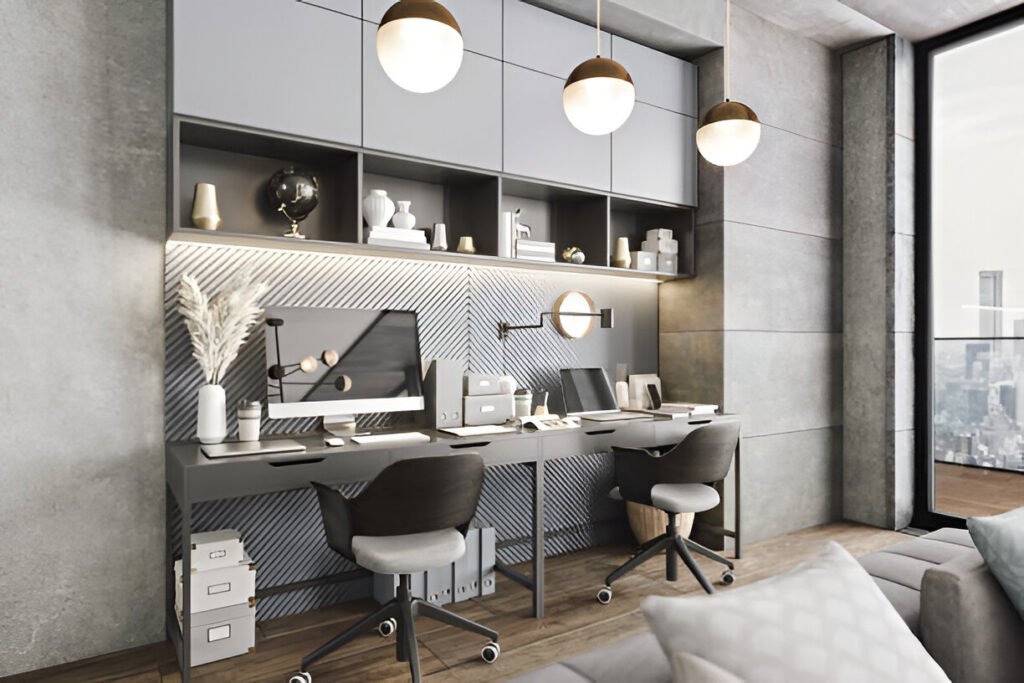
I’ve worked from home for years, and I used to treat my home office lighting as an afterthought. As long as it looked bright, I didn’t think twice. That mindset didn’t hold up.
The bulb you use affects your electricity bill, how much heat builds up in your space, and how tired your eyes feel after hours of work.
That’s why the incandescent light bulb vs LED lighting choice actually matters in a home office. These bulbs perform very differently, and those differences show up fast once you’re working day after day.
Key Takeaways:
- LED bulbs use 75% less energy than incandescent while delivering the same brightness
- Incandescent bulbs last around 1,000 hours compared to LED’s 25,000+ hour lifespan
- Color temperature options in LEDs help reduce eye strain during extended work sessions
- Heat output from incandescent bulbs makes small home offices uncomfortable
Why Home Office Lighting Choice Matters
Your lighting setup isn’t just about seeing your desk. It directly impacts focus, eye strain, and productivity during work hours.
Poor lighting forces your eyes to work harder, causing headaches and fatigue that destroy your output by afternoon.
To understand why bulb choice matters so much, you need to know that different types of lighting serve different purposes.
Ambient lighting provides overall room illumination, task lighting focuses on your immediate work area, and accent lighting reduces harsh contrasts.
The bulb technology you choose affects all three categories through color temperature, brightness consistency, and heat generation.
When setting up your home office, bulb type matters as much as fixture placement.
An incandescent desk lamp generates significant heat and uses way more electricity than an LED lamp producing the same brightness.
For remote workers spending eight hours daily in front of screens, students grinding through study sessions, or content creators filming videos, the wrong lighting compounds stress on your eyes and wallet.
Your bulb technology influences comfort levels, monthly utility costs, and replacement frequency.
Overview of Incandescent Light Bulbs
How Incandescent Bulbs Work
Incandescent bulbs make light by heating a tungsten filament inside a glass bulb until it glows. Electricity runs through the filament, pushing its temperature up to around 2,400–2,700 °C (2,700–3,000 K). That heat is what makes the filament shine, using the same basic idea Edison patented back in 1879.
Though, the downside is they’re not efficient. About 90% of the energy you pay for just turns into heat instead of light, which is why these bulbs get so hot after only a few minutes.
Key Characteristics of Incandescent Lighting
Incandescent bulbs produce a warm color temperature around 2,700 Kelvin, giving off that soft yellowish-white glow many people associate with traditional home lighting.
While this warmth creates a cosy atmosphere in living spaces, the yellow cast reduces contrast in text and on screens, making detailed work harder on your eyes during extended sessions.
One advantage is instant brightness. Flip the switch, and you get full illumination immediately, but that’s where the advantages end.
For home office workers running lights for several hours daily, the lifespan problem becomes immediately apparent.
These bulbs average only 1,000 hours before burning out. If you use your home office light for 5 hours a day, you replace the bulbs every 6 months.
Beyond constant replacement, you’re also dealing with excessive heat output. A 60-watt incandescent bulb radiates enough warmth to noticeably increase room temperature in smaller spaces.
Common household uses include:
- Table lamps in living rooms and bedrooms
- Decorative fixtures where warm ambiance matters
- Appliance lighting in ovens and refrigerators
- Older homes that haven’t upgraded
Overview of LED Lighting
How LED Bulbs Work
LED stands for light-emitting diode. Instead of heating a filament, LEDs use semiconductors to convert electrical current directly into light through electroluminescence.
When electricity flows through the diode, electrons move through the semiconductor material and release energy as photons.
This method is far more efficient because it generates light without wasting significant energy as heat.
LEDs use a semiconductor junction to produce light efficiently, converting roughly 50–80% of their electrical energy into visible light, while the remaining energy is emitted as minimal heat. This is the opposite of incandescent bulbs, which waste about 90% of their energy as heat.
Key Characteristics of LED Lighting
LEDs offer a wide range of color temperatures, from warm white at 2,700 Kelvin all the way up to cool daylight at 6,500 Kelvin. This flexibility lets you match lighting to your specific task or time of day.
Lifespan is where LEDs really shine. Quality LED bulbs last between 25,000 and 50,000 hours, meaning a single bulb could last over a decade with typical home-office use, compared to incandescent bulbs’ six-month replacement cycle.
Heat emission is minimal. An LED bulb stays cool enough to touch even after hours of operation, making them safer around children and reducing fire risk in enclosed fixtures.
Most modern LEDs are fully dimmable when paired with compatible switches, and many integrate with smart home systems for voice control and automated scheduling.
Modern home office applications include:
- Desk lamps with adjustable color temperature for reducing eye strain
- Monitor light bars that eliminate screen glare
- Overhead fixtures in dedicated office rooms
- Smart bulbs that adjust brightness based on the time of day
- Ring lights for video calls
Incandescent vs LED Lighting: Side-by-Side Comparison
Performance Comparison Table
| Feature | Incandescent | LED |
| Brightness consistency | Dims slightly as filament ages | Maintains consistent output for years |
| Heat output | 90% of energy wasted as heat | Minimal heat generation |
| Lifespan | 1,000 hours average | 25,000-50,000 hours |
| Energy use (for 800 lumens) | 60 watts | 8-12 watts |
| Maintenance frequency | Replace every 6-12 months | Replace every 10-20 years |
An incandescent bulb burning at 60 watts to produce 800 lumens of brightness is competing against an LED using just 10 watts for the same light output.
For someone working from home daily, that efficiency gap compounds into significant monthly electricity costs and frequent interruptions from bulb replacements.
Heat generation presents another major operational difference. Incandescent bulbs waste nearly all their energy as thermal radiation you can feel when you place your hand near the bulb.
LEDs channel their energy into light production rather than heat, staying cool to the touch even during extended operation.
Practical Differences in Daily Home Office Use
Task lighting efficiency matters when you’re working at a desk for hours. LED desk lamps let you adjust color temperature to match your work.
Cool white light around 4,000 to 5,000 Kelvin keeps you alert during morning focus sessions, while warm white around 3,000 Kelvin works better for evening work when you don’t want to disrupt your sleep cycle.
Screen glare becomes a problem when lighting choices are poor. Incandescent bulbs in the wrong position create reflections on monitors, forcing you to squint or adjust your seating.
LEDs with directional light patterns and lower heat output give you more control over where illumination lands, reducing glare and creating a more comfortable viewing environment.
Energy Efficiency and Electricity Costs
Power Consumption Breakdown
A standard 60-watt incandescent bulb consumes 60 watts of power per hour. An LED bulb producing equivalent brightness typically uses just 10 watts.
Over five hours of daily use, that’s 300 watt-hours for incandescent versus 50 watt-hours for LED. Scale that across a week and you’re looking at 2,100 watt-hours compared to 350 watt-hours.
Typical daily usage scenarios show the difference:
- Home office desk lamp (5 hours daily): Incandescent uses 1.5 kilowatt-hours weekly, LED uses 0.25 kilowatt-hours
- Overhead room lighting (8 hours daily): Incandescent uses 2.4 kilowatt-hours weekly, LED uses 0.4 kilowatt-hours
- Task lighting for reading (3 hours daily): Incandescent uses 0.9 kilowatt-hours weekly, LED uses 0.15 kilowatt-hours
Long-Term Cost Analysis
Let’s break down real numbers. At average US electricity rates of $0.13 per kilowatt-hour, running a 60-watt incandescent bulb for 5 hours per day costs about $14.20 per year.
The same usage with a 10-watt LED costs roughly $2.37 annually, resulting in savings of nearly $12 per bulb.
Over five years, one LED bulb saves you $60 in electricity costs while the incandescent option forces you to buy five replacement bulbs at around $2 each.
Factor in the LED’s higher upfront cost of maybe $5 versus $1 for incandescent, and you’re still ahead by over $50 per bulb location across five years, a decisive win for LED efficiency.
If you have three light fixtures in your home office, you’d replace incandescent bulbs roughly 15 times over five years versus zero replacements with quality LEDs.
Lighting Quality for Productivity and Content Creation
Color Temperature and Eye Comfort
Warm light below 3,500 Kelvin creates a relaxed atmosphere but can make you drowsy during work hours.
Cool light between 4,000 and 5,500 Kelvin mimics natural daylight and helps maintain concentration during intensive tasks.
The sweet spot for most home office work sits around 4,000 Kelvin, providing a neutral white that doesn’t strain eyes or trigger sleepiness.
Incandescent bulbs lock you into their warm 2,700 Kelvin temperature with no flexibility. LEDs let you choose your preferred temperature or even switch between settings throughout the day.
For video calls and content creation, daylight-balanced lighting around 5,000 to 5,500 Kelvin makes skin tones look natural on camera, without the yellow cast that warm lighting can produce.
Brightness Control and Flicker Considerations
Dimming behavior differs significantly between technologies. Incandescent bulbs dim smoothly on any standard dimmer switch, gradually reducing brightness as you adjust the control.
Early LED bulbs had compatibility issues with traditional dimmers, causing flickering or limited range. Modern LEDs work perfectly with LED-compatible dimmers, offering smooth adjustment from 10% to 100% brightness.
Flicker impact becomes critical if you’re recording video or doing detail work. Some cheap LED bulbs exhibit flicker at certain dimming levels, which shows up as banding in video footage and causes eye fatigue during extended use. Quality LEDs eliminate this problem entirely.
Lighting needs vary by work type:
- Writers benefit from neutral 4,000K lighting that maintains focus without eye strain
- Students need adjustable brightness to match task intensity
- Video creators require flicker-free, daylight-balanced lighting that renders skin tones accurately
Heat, Safety, and Environmental Impact
Heat Output and Workspace Comfort
Small room heat buildup becomes a genuine issue with incandescent bulbs. A 60-watt incandescent radiates significant thermal energy that accumulates in compact home office spaces.
If you’re working in a converted bedroom or closet office, running multiple incandescent bulbs for eight hours raises room temperature noticeably.
That forces your air conditioning to work harder in summer, adding to electricity costs beyond just the bulb consumption.
Proximity concerns with desk lamps matter when you’re sitting inches from your light source. An incandescent bulb gets hot enough to burn skin on contact. LEDs stay cool even after hours.
Environmental Footprint
Energy waste: incandescent technology converts 90% of electricity into heat that serves no purpose.
That wasted energy still required generation at a power plant, contributing to carbon emissions. LEDs convert 80% to 90% of electricity directly into light, minimizing waste.
Disposal presents different challenges for each technology. Incandescent bulbs contain no toxic materials, but their short lifespan means you’re throwing away more units over time.
LEDs last 25 times longer, significantly reducing waste volume. Neither bulb type contains mercury, unlike compact fluorescent bulbs.
While incandescent bulbs require simpler manufacturing, this marginal advantage is offset by their massive energy waste during use.
LEDs deliver enormous environmental savings through reduced electricity consumption and lower replacement frequency.
Compatibility With Modern Home Office Setups
Smart Lighting and Automation
Voice assistants like Alexa and Google Assistant integrate seamlessly with smart LED bulbs, letting you control lights without leaving your desk. You can’t retrofit incandescent bulbs with smart capabilities.
Scheduling features allow LEDs to automatically adjust based on time of day. Set your desk lamp to switch from energizing cool white in the morning to relaxed warm white after 6 PM without manual intervention.
Adaptive brightness responds to ambient light levels, dimming when natural sunlight floods your office and brightening as evening approaches, creating optimal conditions.
Fixture and Lamp Compatibility
Desk lamps designed for incandescent bulbs accept LED replacements without modification, though you’ll want to verify wattage equivalence and a compatible base type. Most desk lamps use E26 or E27 screw bases that work with both technologies.
Overhead fixtures in home offices typically support both bulb types, but enclosed fixtures benefit from LEDs because they produce less heat. Incandescent bulbs in fully enclosed fixtures can overheat and fail prematurely.
Ring lights and video call equipment almost universally use LED technology now due to superior color rendering.
Common Myths and Misconceptions
LED myths persist despite years of advancement:
- “LED light quality is harsh” – Modern LEDs offer colour rendering index ratings of 90+ that rival incandescent bulbs, with warm colour options identical to traditional bulbs
- “LEDs cost too much” – While upfront cost is higher, the total cost of ownership over two years makes LEDs cheaper due to energy savings and eliminated replacement costs
- “Incandescent bulbs are brighter” – Brightness depends on lumens, not technology; an 800-lumen LED matches an 800-lumen incandescent exactly while using 85% less electricity
- “LEDs don’t work with dimmers” – Modern LED bulbs work with LED-compatible dimmers, offering smooth adjustment
- “Incandescent heat is beneficial” – Using bulbs for heating is inefficient compared to heating systems
These misunderstandings often stem from experiences with early LED technology from over a decade ago.
This makes most common objections outdated and avoid common home office setup mistakes when choosing bulbs.
Which Lighting Is Best for Your Home Office?
Best Choice for Remote Workers and Students
LED lighting is a win for anyone spending significant hours at a desk. The ability to adjust color temperature throughout the day helps maintain alertness during work hours without disrupting sleep patterns in the evening. Energy savings add up quickly when you run lights for eight hours a day.
Students benefit from LEDs’ long lifespan since they won’t interrupt study sessions to replace burned-out bulbs every few months.
The cool operating temperature prevents desk areas from becoming uncomfortably warm during marathon homework sessions, and optimizing your workspace for productivity becomes easier with adjustable LED options.
Best Choice for Content Creators and Video Calls
LEDs are the only practical option for content creation. Flicker-free operation ensures clean video footage without banding effects that plague some lighting technologies.
Daylight-balanced options around 5,000K to 5,500K provide accurate colour rendering, making skin tones look natural on camera.
Adjustable brightness lets you fine-tune lighting intensity to match your shooting conditions without swapping bulbs.
The choice becomes obvious when you consider your needs: if you need reliable, efficient, adjustable lighting that won’t require constant maintenance or spike your electricity bill, choose LED.
The only scenario where incandescent makes sense is if you already own the bulbs and plan to use them until they burn out.
Final Verdict: Incandescent vs LED for Home Offices
The comparison isn’t close when you look at the total value. LED technology outperforms incandescent in every category that matters for home office use: energy efficiency, lifespan, heat management, and lighting flexibility.
A typical home office with three light fixtures saves roughly $150 over five years by using LEDs instead of incandescent bulbs. Long-term practicality strongly favours LEDs.
Not dealing with regular bulb replacements eliminates an annoying maintenance task and reduces waste.
Lower heat output makes your workspace more comfortable and reduces air conditioning costs in warm months. Smart home integration and colour temperature adjustment provide capabilities that incandescent technology cannot match.
When incandescent still makes sense: Temporary living situations where you already have incandescent bulbs installed, or vintage fixtures where visible filaments matter aesthetically.
When LED clearly wins: Permanent home office setups, high-usage scenarios, small spaces where heat matters, and any situation where you want smart features.
For comprehensive guidance, check your home office setup checklist and explore home office lighting options alongside essential home office equipment considerations.
Frequently Asked Questions: Incandescent Light Bulb vs LED Lighting
Are incandescent lights better than LED?
No, incandescent lights aren’t better than LED in any practical metric for home office use. LEDs consume 75% less energy, last 25 times longer, generate minimal heat, and offer adjustable color temperatures that incandescent bulbs can’t match.
What is the disadvantage of LED light?
The main disadvantage of LED lighting is the higher upfront cost compared to incandescent bulbs. Some cheaper LED models may be incompatible with older dimmer switches or exhibit flicker at certain brightness levels if you don’t buy quality products.
Is incandescent better for the eyes?
Incandescent lighting isn’t inherently better for eyes. Both technologies can cause eye strain if brightness or positioning is poor. LEDs actually offer advantages for eye comfort through adjustable color temperature and flicker-free operation when you choose quality bulbs with high CRI ratings.
Does anyone still use incandescent bulbs?
Yes, some people still use incandescent bulbs in existing fixtures until they burn out, in vintage decorative applications where appearance matters more than efficiency, or in locations where bulbs run infrequently enough that energy costs don’t justify immediate replacement.